
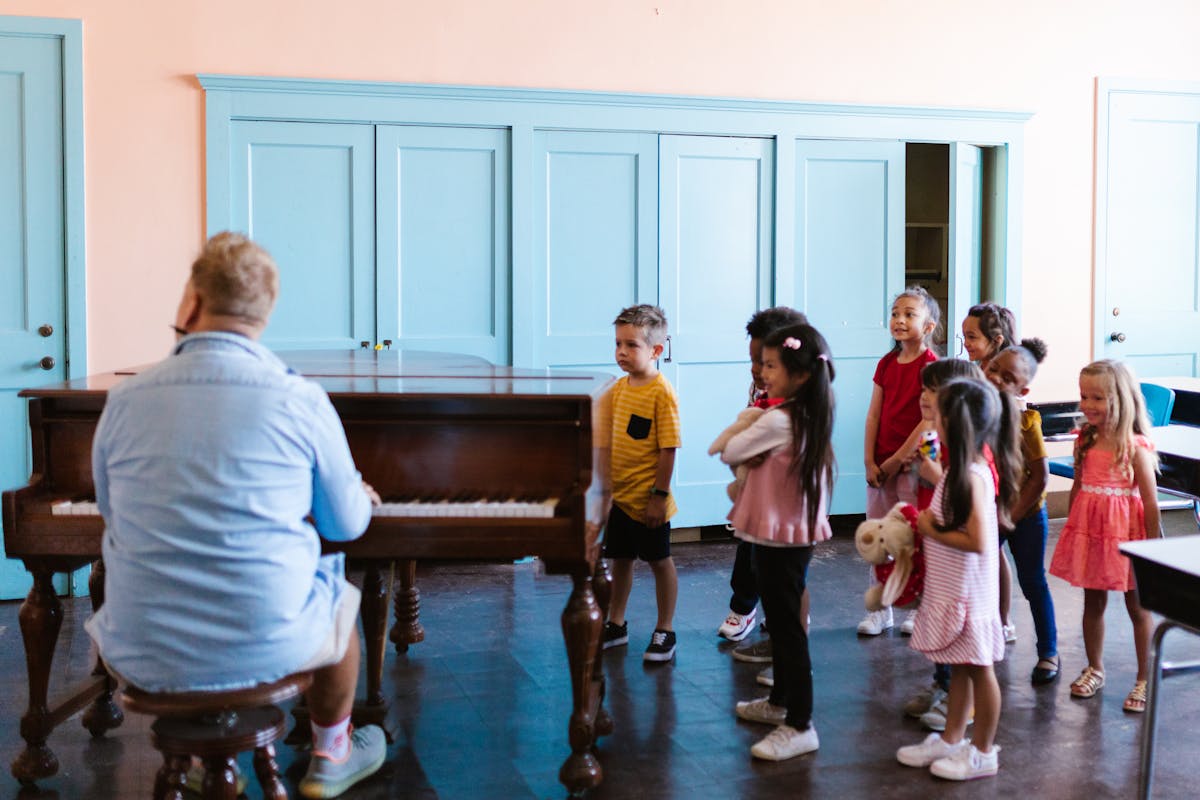
A look at how the performing arts shape confidence, communication, and character in young learners.
Music and drama have long held a place at the heart of British prep school life, yet their importance often goes underappreciated outside the school gates. For children aged between four and thirteen, these subjects are not simply pleasant extras tucked between maths and English. They are powerful vehicles for cognitive growth, emotional literacy, and social confidence. The benefits, increasingly supported by educational research, can shape a child long after the final curtain has fallen on a school production.
More Than a Hobby: Cognitive and Academic Benefits
A growing body of research from organisations such as the Royal Society of Arts and the Education Endowment Foundation has highlighted the link between regular musical practice and stronger academic performance in literacy and numeracy. Learning an instrument requires pattern recognition, memory, and fine motor coordination. Drama, similarly, sharpens verbal reasoning, vocabulary, and the ability to interpret meaning beyond the literal. Schools with a strong creative arts ethos often see these gains reflected in classroom engagement and oracy.
Building Confidence Through Performance
Few experiences match the confidence boost of stepping onto a stage, whether to deliver a single line in a nativity play or to play a violin solo at a Spring concert. Performing teaches children to manage nerves, project their voice, and recover gracefully when things do not go to plan. These are durable life skills. The poise developed at age nine in a school assembly translates, years later, into a steady hand during a university interview or a first job presentation.
Empathy, Collaboration, and Emotional Intelligence
Drama in particular asks children to step inside the shoes of someone else. They might play a Victorian factory worker one term and a mischievous sprite the next. This kind of imaginative role play is consistently linked with the development of empathy and perspective taking. Ensemble work in choirs, orchestras, and theatre productions teaches collaboration in its truest form. Each child has a part to play, and the success of the whole depends on each individual giving their best.
A Refuge from Screens and Pressure
In an era when children spend more time than ever in front of screens, music and drama offer something rare: focused, embodied attention with other people in the same room. Rehearsals demand presence. Pupils listen, react, and create together. For many children, the rehearsal room becomes a place where the pressures of testing and online life fall away, and a quieter kind of growth becomes possible.
How Prep Schools Embed the Arts
The most effective prep schools weave music and drama into the very rhythm of the week rather than confining them to a single timetabled lesson. House singing competitions, weekly assembly performances, peripatetic instrumental tuition, and termly productions give every child multiple opportunities to take part. Parents looking for the right environment for their child can explore Bishops Gate School and learn more about its approach at https://www.bishopsgateschool.com/.
Encouraging Participation at Home
Parents do not need a music degree to nurture artistic interest at home. Simple steps make a real difference: keeping a small instrument such as a recorder or ukulele within easy reach, listening to a wide range of music in the car, attending local productions, and encouraging children to invent and perform their own stories. Praise the effort and the imagination rather than the outcome. A child who feels safe to be creative will keep returning to it.
A Foundation That Lasts
Not every prep school pupil will go on to become a professional musician or actor, and that has never been the point. The aim is to give every child a lasting relationship with the arts: the confidence to sing in a room of strangers, the patience to learn something difficult over many months, and the empathy that comes from telling someone else’s story. These habits of mind serve children well in any future career and in any community they later call home.
About the Author
Bishops Gate School. Bishops Gate is an independent prep school offering a broad and balanced education to children from Nursery through to the end of Year 8. The school places a strong emphasis on the creative arts alongside academic rigour, and welcomes enquiries from families looking for a warm and ambitious environment for their child. More information is available at https://www.bishopsgateschool.com/.