
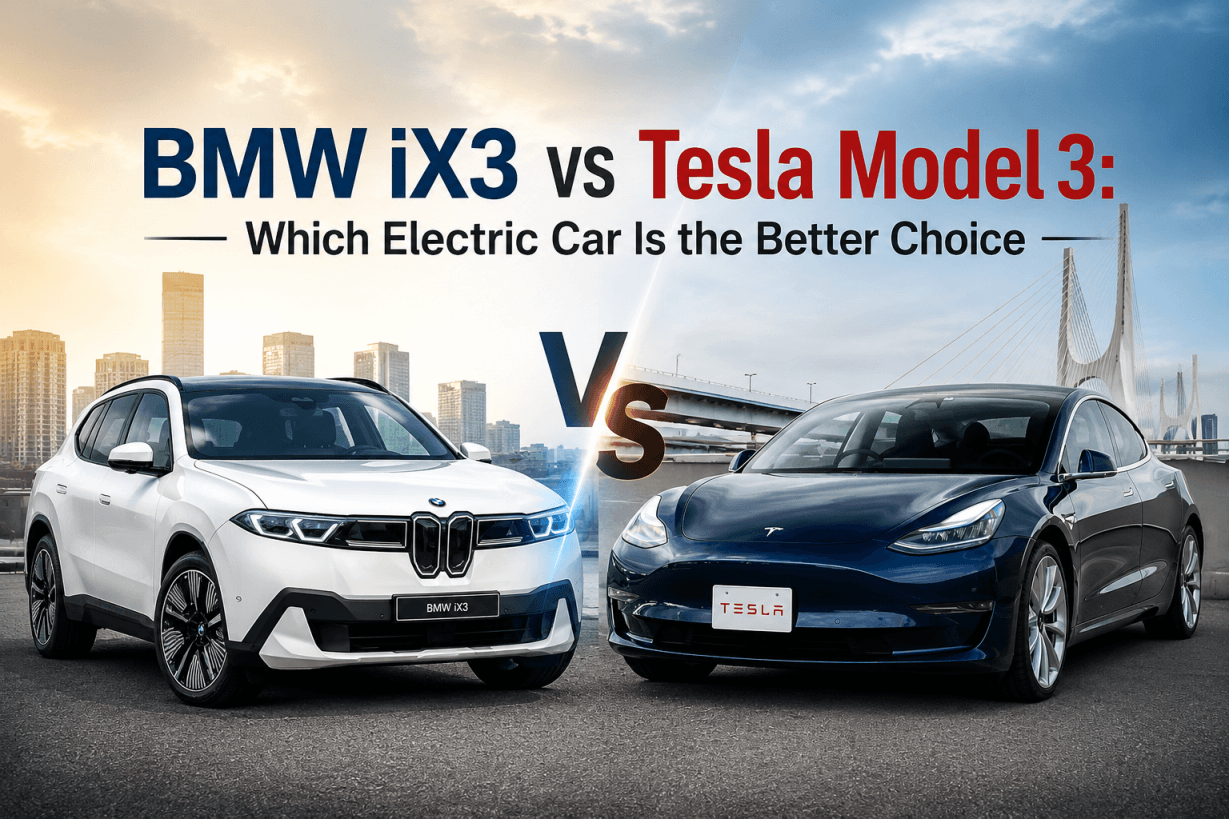
The BMW iX3 vs Tesla Model 3 debate has become one of the most common conversations in EV showrooms, online forums, and family driveways around the world — and for good reason. On one side you have Tesla’s best-selling electric sedan, a car that practically invented the idea of mainstream EV desirability. On the other sits the BMW iX3, a ground-up electric SUV built on BMW’s brand new Neue Klasse platform, engineered to challenge every expectation attached to the three letters BMW and reimagine what a premium electric car should be. Choosing between them is not as simple as picking the one with the longer spec sheet. It is about understanding which machine actually fits the life you lead.
Both cars represent the current best from their respective brands. Both have impressive ranges, thoughtful interiors, and strong real-world driving credentials. But they are different vehicles in different segments solving slightly different problems. This comparison breaks down everything that matters — range, performance, charging, interior quality, practicality, technology, and long-term ownership costs — so you can make the call with confidence.
A Quick Look at What Each Car Actually Is
Before getting into the numbers, it helps to be clear about the nature of each car, because the two are not directly competing on every level.
The Tesla Model 3 is a compact electric sedan. It sits lower to the ground, prioritises aerodynamic efficiency, and is available in four trim levels — Standard, Premium RWD, Premium AWD, and Performance — covering a wide price range. It has been on sale in various forms since 2017, and its latest iteration, the Highland facelift, brought a significantly more refined interior and improved ride quality. It is the world’s best-selling electric sedan and one of the most recognisable cars on roads in North America, Europe, Asia, and Australia.
The BMW iX3, in its second-generation form unveiled at the 2025 Munich Motor Show, is a compact electric SUV. It is built on BMW’s new Neue Klasse platform — a clean-sheet EV architecture — and represents a significant step forward from its predecessor. It is currently available in one variant globally: the iX3 50 xDrive, a dual-motor all-wheel-drive version with a large battery and class-leading fast charging. A rear-wheel-drive iX3 40 variant with a lower price is expected to follow.
“If you want a premium sedan that does everything quietly and efficiently, the Model 3 is hard to beat. If you want a premium SUV that charges faster than almost anything else on the market, the iX3 is genuinely remarkable.”
Range and Efficiency: How Far Can They Actually Go?
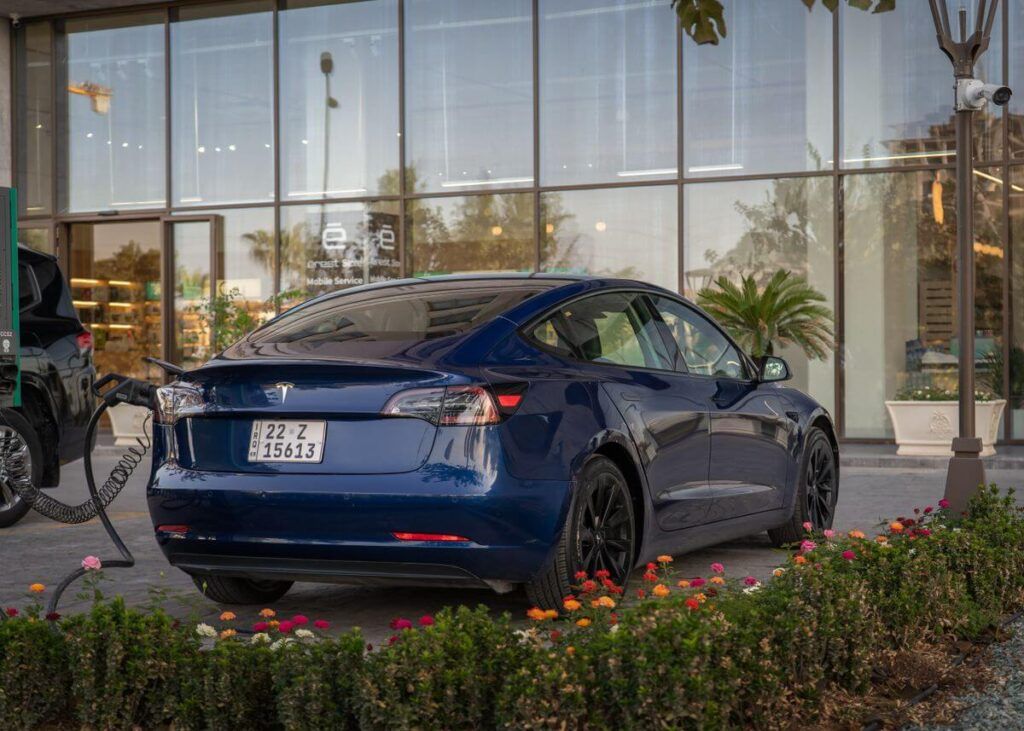
On pure numbers, the BMW iX3 wins the range conversation. The 50 xDrive carries a 108 kWh usable battery and achieves up to 434 miles of EPA-estimated range, with WLTP figures reaching 500 miles under ideal conditions. In everyday mixed driving, independent tests suggest real-world figures in the 350–380 mile bracket depending on speed and climate — still exceptional for a mid-size SUV.
The Tesla Model 3 is no slouch. The Premium RWD variant achieves up to 363 miles on the EPA cycle, and the AWD version manages 346 miles. What the Model 3 gives up in headline range it compensates with impressive real-world efficiency, rated at around 4.1 miles per kWh in the Premium RWD — among the best of any five-seat electric car currently on sale. In city driving especially, the Model 3 can run surprisingly close to its rated range, something SUVs with larger frontal areas often struggle to match.
The short version: the iX3 can go further on a single charge, but the Model 3 makes better use of every kilowatt-hour in the battery. For drivers who do frequent long motorway runs, the iX3’s greater raw range matters. For urban and mixed driving, the Model 3’s efficiency means its smaller battery goes further than you might expect.
Performance: Fast, or Really Fast?
Both cars are quick. In everyday use, neither will feel slow. But there are meaningful differences once you look at the specifics.
BMW iX3 50 xDrive
The iX3’s dual-motor setup produces 463 horsepower and 473 lb-ft of torque. It completes the 0–62 mph sprint in 4.9 seconds, which is firmly in sports car territory for a vehicle of this size and weight. The power delivery is smooth and confidence-inspiring rather than aggressive, and at motorway speeds the front motor can decouple for improved efficiency — a neat trick that reduces energy drain during cruising without sacrificing response when you need it.
Tesla Model 3
The Model 3 story spans a wider range. The base Standard version handles 0–60 mph in around 5.8 seconds. The Premium AWD does it in 4.2 seconds. And the Performance version — Tesla’s sport-tuned top trim — takes just 3.0 seconds, a figure that beats many dedicated sports cars and makes it one of the quickest production sedans available at any price. The Performance also comes with upgraded Brembo brakes and an adaptive suspension as standard.
If outright pace matters to you, the Model 3 Performance wins decisively. If you want a car that feels fast in normal driving without demanding sport-car sensibilities, the iX3 is impressively quick and arguably more composed under hard acceleration given its all-wheel-drive traction from a standing start.
Side-by-Side Specifications
| Specification | BMW iX3 50 xDrive | Tesla Model 3 Premium RWD |
|---|---|---|
| Body Type | Compact Electric SUV | Compact Electric Sedan |
| Battery Capacity | 108 kWh (usable) | ~79 kWh (estimated) |
| EPA Range | Up to 434 miles | 363 miles |
| 0–62 mph | 4.9 sec | 4.8 sec (comparable) |
| Power Output | 463 hp (dual-motor AWD) | 282 hp (single motor RWD) |
| Max DC Fast Charging | 400 kW | 250 kW (V4 Supercharger) |
| 10%–80% Charge Time | ~21 minutes | ~25–30 minutes |
| Efficiency (miles/kWh) | 3.8–4.1 | 4.1 (best in class) |
| Boot Capacity | 570 litres | 594 litres (boot + frunk) |
| Starting Price (USD, approx.) | ~$61,500 | From $36,990 |
| Charging Network | All public CCS networks | Tesla Supercharger + CCS |
| Battery Warranty | 8 years / 100,000 miles | 8 years / 120,000 miles |
Figures based on manufacturer data and independent test results. Performance trim Tesla figures differ. Pricing varies by region and available options.
Charging: Speed, Network, and Day-to-Day Reality
Charging capability has become one of the most important purchase factors for EV buyers, and this is where the two cars tell very different stories.
BMW iX3 — The Fastest Charger in the Segment
The iX3’s headline charging figure is 400 kW peak DC fast charging — among the highest of any non-hypercar electric vehicle currently on the market. In practice, this means going from 10% to 80% in approximately 21 minutes when connected to a compatible ultra-rapid charger. The iX3 also supports bidirectional charging (V2H, V2G, V2L), which means it can power your home or other devices from its battery — a genuine lifestyle advantage that very few cars offer at this price point.
The caveat is that 400 kW chargers are not yet widely available in many markets. At 150–350 kW chargers, which are far more common globally, the iX3 still charges impressively quickly, but you may not always capture the headline number.
Tesla Model 3 — The Best Charging Network
The Model 3 charges at up to 250 kW on Tesla’s V4 Supercharger network. That is meaningfully slower than the iX3’s peak, but the Supercharger network’s global density is unmatched. In the United States, Europe, and many parts of Asia and Australia, Tesla’s Supercharger network offers stalls in locations and with consistency that other public charging networks have yet to replicate reliably. On a road trip, this network advantage translates directly into less range anxiety and fewer frustrating detours.
Tesla’s app integration with the navigation system also automatically routes you through Supercharger stops and pre-conditions the battery for faster charging before you arrive — a seamless experience that BMW is still building towards.
Interior and Technology: Two Very Different Philosophies
Spend time inside both cars and you quickly realise that BMW and Tesla approach the interior with entirely different ideas about what luxury and usability mean.
BMW iX3 — Familiar Premium, New Technology
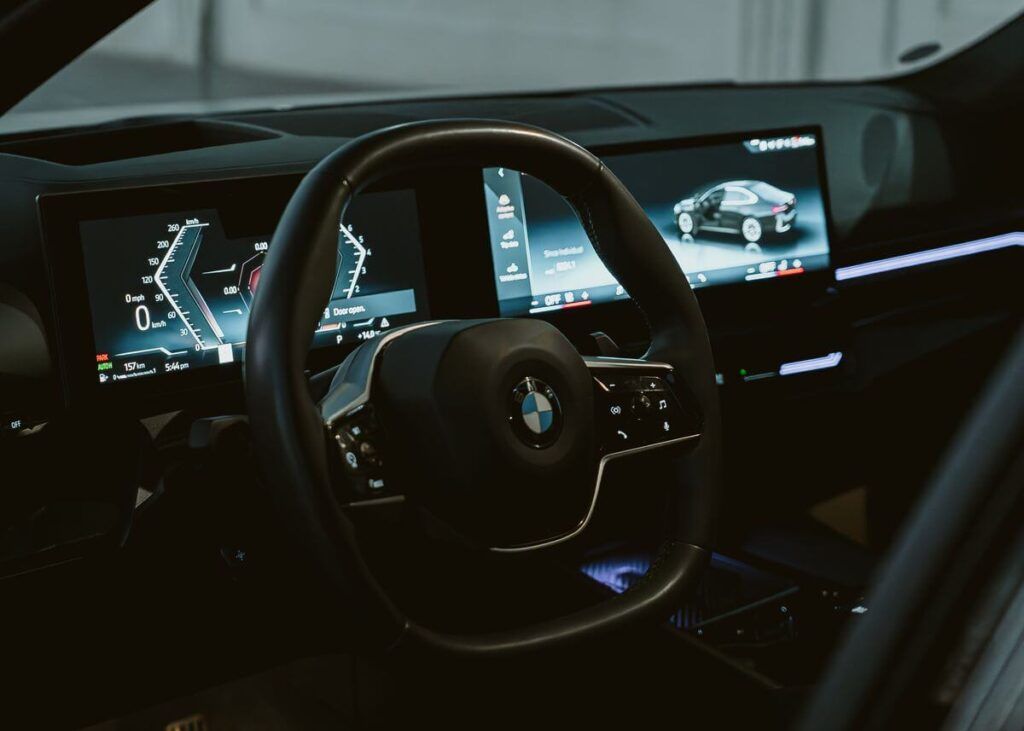
The iX3’s cabin is built around BMW’s new BMW Operating System X, which runs on a 17.9-inch central touchscreen. Below the windshield runs an end-to-end Panoramic Vision display that projects speed, navigation, and driving data directly in the driver’s line of sight without requiring you to glance down at a console — a genuinely useful feature that traditional head-up displays don’t quite match. Physical buttons for the most commonly used functions remain, which many drivers appreciate. The materials are excellent, with high-bolstered seats, premium Veganza upholstery as standard, and optional Merino leather. Rear passengers have generous headroom and legroom thanks to the SUV’s boxy architecture, and the 570-litre boot is practical and easy to load.
Tesla Model 3 — Minimalism with Depth
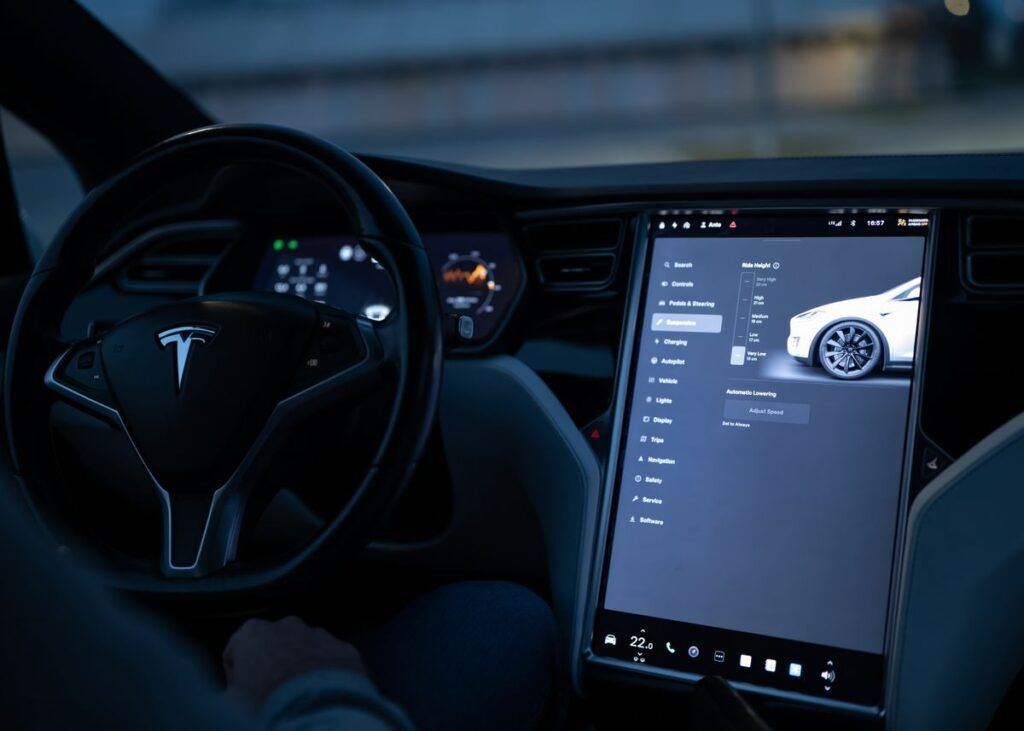
Tesla’s interior approach is maximally stripped back. There is essentially one screen — the 15.4-inch central touchscreen — and nearly every function from window demisting to wipers to turn signals is managed from it or via steering column controls. This is polarising. Some drivers love the clarity and the sheer capability of what the software can do. Others find searching menus while driving genuinely distracting and miss the muscle memory of a physical button. The Highland update did bring meaningful improvements in perceived quality — better ambient lighting, ventilated front seats, and a dedicated 8-inch screen for rear passengers — but the cabin still has fewer tactile touchpoints than a BMW at this price.
Where Tesla compensates powerfully is in software. Over-the-air updates continuously improve performance, range, and features without visiting a dealer. The Autopilot system handles motorway driving including lane changes and speed adjustments with minimal input. Full Self-Driving capability is available as a subscription or one-off upgrade, though regulatory approvals vary by market.
Practicality and Real-World Living
Neither car is impractical, but the differences in body style lead to genuinely different ownership experiences.
The iX3’s SUV stance gives it easier access — particularly for passengers with mobility considerations, for loading shopping, or for placing children in rear-facing car seats. The raised seating position is a comfort preference that a large portion of buyers actively seek out. The boot is accessible and wide, with a low load floor.
The Model 3 has a generous 594 litres of total storage when you combine the rear boot and the front trunk (frunk). The frunk is a practical bonus that sedan buyers might not expect, and it works well for separating clean and dirty loads. The low roofline means taller adults occasionally find the rear headroom tighter on longer trips than in the iX3, though the seat itself is comfortable enough.
For families with young children, the iX3 generally wins. For couples, single occupants, or those who rarely need rear passengers, the Model 3 is entirely adequate and adds the bonus of a smaller footprint in city parking and urban manoeuvring.
Price, Value, and Cost of Ownership
This is where the gap between the two cars is most obvious. The Tesla Model 3 starts from around $36,990 in the United States for the base Standard variant, with the Premium RWD at $42,490 and the Performance at $54,990. In European and other markets, equivalent prices apply with local tax adjustments. It is one of the most competitively priced electric cars in its segment globally.
The BMW iX3 50 xDrive starts from approximately $61,500 in the US — a substantial premium. In the UK, prices begin at around £53,250. For that extra investment, you get the larger SUV body, the 108 kWh battery, significantly faster charging, bidirectional capability, and the BMW ownership package including a three-year vehicle warranty and an eight-year/100,000-mile battery warranty. According to BMW’s official model page, the iX3 is positioned as a premium long-range flagship — not a direct Model 3 competitor on price, but a legitimate alternative for those who can stretch the budget.
Running costs are broadly similar. Both benefit from low energy costs compared to petrol equivalents, minimal servicing requirements, and strong resale values. The Model 3 has a slightly longer track record in the used market, which gives buyers better data on depreciation curves. The iX3 is too new to draw firm conclusions, though BMW’s brand reputation for residuals is historically solid.
🏆 Quick Verdict: Which Should You Choose?
- Choose the Tesla Model 3 if you want the best value per pound/dollar, the most efficient sedan on the market, access to the world’s best charging network, and cutting-edge software that improves over time.
- Choose the BMW iX3 if you want an SUV body style, a much longer official range, the fastest DC charging speed in the class, bidirectional home charging capability, and a more traditional premium interior with physical controls.
- Neither is the wrong answer — they serve different needs, and the most important question is whether you want a sedan or an SUV, not which brand is “better.”
Safety and Driver Assistance
Both cars come well-equipped with safety technology as standard. The BMW iX3 includes adaptive cruise control, lane departure warning, blind-spot monitoring, cross-traffic alert, automatic emergency braking, and the new Driving Assistant Plus package. The car debuted the latest generation of BMW’s driver assistance systems, and while it has not yet been through full Euro NCAP testing, BMW as a manufacturer scored sixth out of thirty in the 2025 What Car? Driver Power survey — well above Tesla in that particular ranking.
The Tesla Model 3 comes with Tesla’s version of Autopilot as standard, which handles adaptive cruise control and lane centring on motorways. The camera-based system is mature after years of real-world refinement across millions of vehicles globally. Full Self-Driving is offered as a paid upgrade. The Model 3 has historically performed very well in crash safety tests, consistently achieving five-star ratings from both Euro NCAP and the US NHTSA.
Which One Is Right for You? The Honest Summary
Strip everything back and the choice between the BMW iX3 and the Tesla Model 3 comes down to three practical questions: Do you want a sedan or an SUV? What is your budget? And which charging ecosystem suits your driving patterns?
The Model 3 is the right choice for buyers who want the best electric sedan on the market at a genuinely attainable price. Its efficiency, software ecosystem, and Supercharger network make it brilliantly suited to everyday life in almost any country where EVs are sold. It is smaller, lighter, and more aerodynamically slippery than the iX3, and the Performance variant offers supercar acceleration for the money.
The iX3 is the right choice for buyers who need the SUV form factor, want the longest possible range from a single charge, and plan to use ultra-rapid charging infrastructure — or who simply want the assurance of buying from a brand with a long tradition of premium engineering. Its 400 kW charging capability, V2H bidirectional power, and new Neue Klasse platform position it at the cutting edge of what an electric SUV can do in 2026.
For those considering the broader electric vehicle landscape beyond just these two models, it is also worth exploring the wider range of zero-emission vehicles available, where you may find the right combination of range, price, and practicality for your specific situation.
Frequently Asked Questions
Which has better range, the BMW iX3 or Tesla Model 3?
The BMW iX3 50 xDrive has a higher headline range — up to 434 miles EPA-estimated — compared to the Tesla Model 3’s maximum of 363 miles (Premium RWD). The Model 3 is more efficient per kWh in real-world conditions, however, which partially closes the gap in mixed driving.
Is the BMW iX3 worth the extra cost over the Tesla Model 3?
It depends on your priorities. The iX3 costs significantly more but gives you an SUV body, larger battery, faster DC charging, and bidirectional capability. If those features matter to your lifestyle, the premium is justified. If you just want a great electric car at the best possible value, the Model 3 remains hard to beat.
Which is faster, the BMW iX3 or Tesla Model 3?
The Tesla Model 3 Performance (3.0 seconds, 0–60 mph) is considerably faster than the iX3 (4.9 seconds, 0–62 mph). The iX3 is quicker than the base and mid-range Model 3 variants, though. In everyday driving, both feel more than adequately quick.
Which electric car is better for families?
The BMW iX3 suits families better due to its SUV dimensions — more headroom, easier access, and a higher driving position. The Tesla Model 3 is practical for two adults and accommodates families, but the lower sedan roofline means less headroom for rear passengers on long trips.
Which has the better charging network, BMW iX3 or Tesla Model 3?
The iX3 supports faster peak charging (400 kW) but relies on public CCS networks, which vary in availability and reliability by country. The Model 3 has access to Tesla’s Supercharger network — one of the densest and most consistent global charging networks — which gives it a practical edge for long-distance drivers in most markets.
Final Word
The BMW iX3 and Tesla Model 3 are both genuinely excellent electric cars. Neither deserves to be dismissed, and neither is objectively superior across every dimension. The iX3 raises the bar for range and charging speed in the SUV class. The Model 3 remains the benchmark for electric sedan efficiency, value, and charging network convenience.
If you are someone who values space, a commanding driving position, and the fastest possible top-up at the charger — and budget allows — the iX3 is a remarkable piece of engineering that makes a compelling case for itself. If you want to maximise what your money gets you in a refined, efficient, tech-forward electric car, the Model 3 continues to lead the class it helped create.
Whichever you choose, the fact that this decision is so genuinely difficult is the real story. Electric vehicles have arrived at a level of maturity where choosing between them feels a lot like choosing between two great traditional cars — a welcome place for drivers and for the planet to be.