
Featured Snippet Answer: A complete travel packing checklist covers documents and money, clothing appropriate to the destination and activities, toiletries, electronics and chargers, and trip-specific items like adapters or medications — organized and reviewed a few days before departure rather than packed at the last minute.
Table of Contents
- Why a Checklist System Beats Packing From Memory
- Documents and Money
- Clothing Strategy by Trip Type
- Toiletries and Personal Care
- Electronics and Tech Essentials
- Health and Safety Items
- Packing Techniques That Actually Save Space
- Common Packing Mistakes
- FAQ
Packing from memory reliably leads to forgotten essentials and overpacked bags. A structured checklist, adapted to the specific trip, removes the guesswork and makes packing considerably faster and more reliable over time.
Key Takeaways – A structured, reusable checklist prevents both forgotten essentials and last-minute, stressful packing. – Clothing strategy should adapt to the specific destination, season, and planned activities rather than a single universal list. – Packing techniques (rolling clothes, using packing cubes) can meaningfully increase usable space without adding weight. – Carry-on-only travel is realistic for most trips under two weeks with the right strategy and mindset. – Reviewing and adjusting a personal checklist after each trip improves it over time based on genuine experience.
Why a Checklist System Beats Packing From Memory
A written, reusable checklist removes the cognitive load of trying to remember everything needed while also managing the general stress of trip preparation. It also allows for quick packing before short-notice trips and provides a natural place to note what worked and didn’t after each trip, refining the list over time based on genuine experience rather than starting from scratch every time.
Documents and Money
- Passport (and visa, if required for the destination), checked for adequate remaining validity
- Physical and digital copies of important documents (passport, ID, travel insurance, itinerary) stored separately from the originals
- Travel insurance details and emergency contact information
- Sufficient local currency for arrival, plus at least one backup payment method
- Driver’s license or International Driving Permit, if planning to drive
- Any required vaccination or health documentation for the specific destination
Clothing Strategy by Trip Type
Rather than a single universal clothing list, strategy should adapt to trip specifics:
Warm-weather destinations: lightweight, breathable fabrics, sun protection layers, swimwear if relevant, and at least one layer for air-conditioned spaces or cooler evenings.
Cold-weather destinations: layering pieces (base layers, insulating mid-layers, a weatherproof outer layer), warm accessories (hat, gloves, scarf), and appropriate footwear for expected conditions.
Business travel: a small number of versatile, easily coordinated professional pieces, wrinkle-resistant fabrics where possible, and one dressier option for unplanned formal situations.
Active or outdoor trips: moisture-wicking layers, appropriate footwear for planned activities, and any specialized gear specific to the activity (hiking, water sports, etc.).
| Trip Type | Key Clothing Consideration | Common Oversight |
|---|---|---|
| Warm weather | Sun protection, breathable fabrics | Forgetting a layer for AC or evening cool-down |
| Cold weather | Proper layering system | Underestimating extremity protection (hands, head) |
| Business | Versatile, coordinated pieces | Overpacking for unlikely formal scenarios |
| Active/outdoor | Activity-appropriate gear | Not breaking in new footwear before the trip |
Toiletries and Personal Care
- Travel-sized toiletries meeting carry-on liquid restrictions, or full-sized items if checking luggage
- Any prescription medications in original, labeled containers, with a copy of the prescription for international travel
- Basic first-aid items (pain relievers, adhesive bandages, motion sickness remedies if relevant)
- Sunscreen and insect repellent, particularly for relevant destinations and seasons
- Any specific personal care items not easily purchased at the destination
Electronics and Tech Essentials
- Phone charger and a portable battery pack for travel days
- Universal power adapter for international destinations with different outlet types
- Headphones for flights or other long transit periods
- Camera and any specific accessories, if not relying solely on a phone camera
- E-reader or downloaded entertainment for long flights or transit, particularly useful with unreliable in-flight connectivity
Health and Safety Items
- A small personal first-aid kit appropriate for the destination and planned activities
- Copies of critical medical information, particularly for travelers with specific health conditions
- Hand sanitizer and any destination-specific health precautions (water purification, specific medications recommended for the region)
- Emergency contact information, both for people at home and local emergency services at the destination
Packing Techniques That Actually Save Space
Rolling clothes rather than folding them flat generally saves meaningful space and can reduce wrinkling for many fabric types.
Packing cubes organize a bag by category (tops, bottoms, toiletries) while also compressing clothing to save additional space, and make locating specific items considerably faster than digging through an unorganized bag.
The “capsule wardrobe” approach to packing — choosing a small number of coordinating pieces that can be mixed and matched across multiple outfits — reduces total clothing volume while still providing outfit variety.
Wearing the bulkiest items (heaviest shoes, a jacket) during transit rather than packing them saves meaningful suitcase space and weight allowance.
A Practical Example: Packing for a Week-Long Warm-Weather Trip
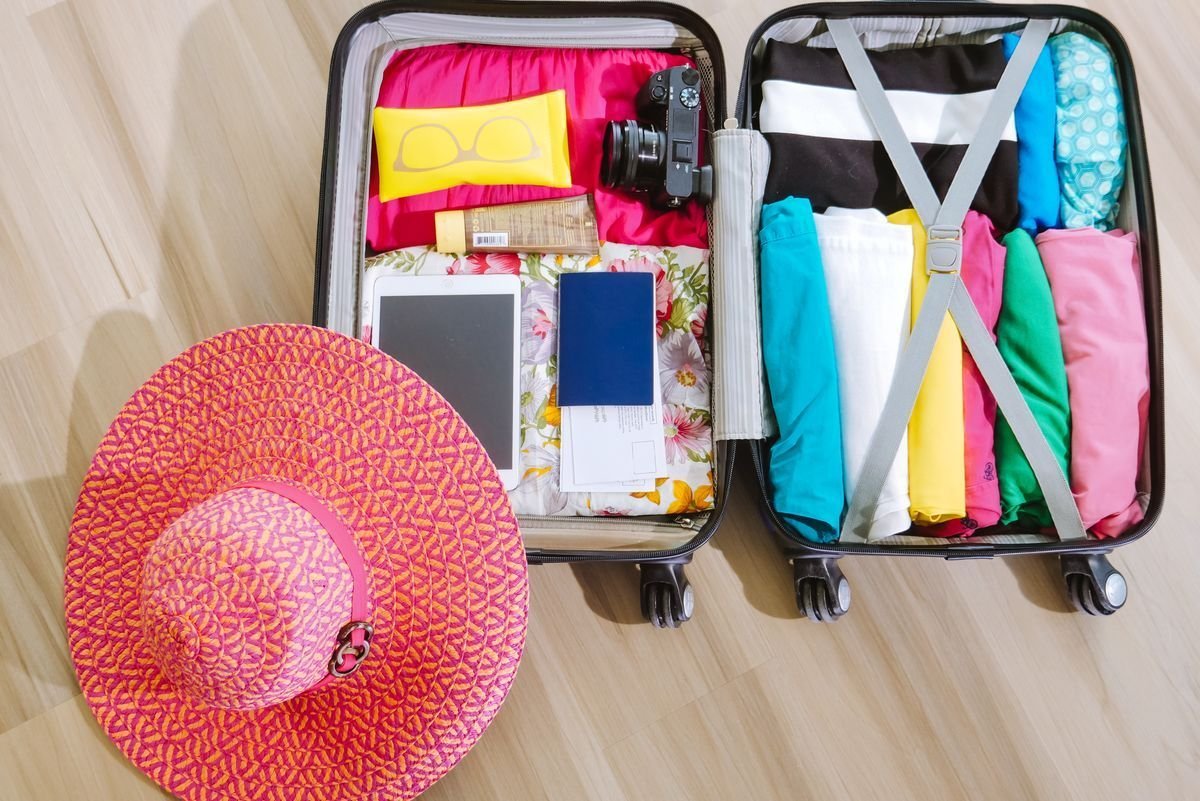
Consider packing for a week-long trip to a warm-weather destination, aiming for carry-on-only. A practical approach: choosing a coordinated color palette of four or five tops and two or three bottoms that mix and match into considerably more than five distinct outfits, packing one layer for air-conditioned spaces or cooler evenings, and planning to wear the bulkiest shoes during travel days rather than packing them. Toiletries stay travel-sized to meet carry-on liquid restrictions, with any larger quantities of specific products purchased at the destination if needed rather than packed from home. This approach typically fits comfortably in a single carry-on while still providing genuine outfit variety and covering realistic contingencies.
Packing for Family Trips With Children
Traveling with children adds specific packing considerations beyond adult essentials: extra changes of clothes given the higher likelihood of spills or accidents, entertainment items for transit (books, tablets with downloaded content, small toys), snacks that travel well and address potential food pickiness in unfamiliar settings, and any specific comfort items that support a child’s routine and sense of security in an unfamiliar environment. Packing a small “emergency kit” specifically for transit days — snacks, entertainment, a change of clothes, and basic first aid — kept easily accessible rather than buried in checked luggage, tends to reduce stress during the actual travel days themselves.
Common Packing Mistakes
- Packing based on every possible scenario rather than the specific, planned itinerary and destination conditions.
- Waiting until the last minute to pack, leading to rushed decisions and forgotten essentials.
- Overpacking “just in case” items that go entirely unused, adding unnecessary weight and bulk.
- Failing to check destination-specific requirements (visa needs, vaccination requirements, customs restrictions) with enough advance time to address them.
- Not leaving any spare space or weight allowance for items acquired during the trip, like souvenirs.
Planning for Laundry on Longer Trips
For trips longer than about a week, planning to do laundry partway through, rather than packing enough clothing for the entire duration, meaningfully reduces total luggage volume. A small packet of travel-friendly laundry detergent or sheets allows for a quick sink wash of essentials in accommodation without laundry facilities, and many hostels and guesthouses offer affordable laundry service or self-service machines. Building an assumption of mid-trip laundry into the initial packing plan, rather than treating it as a last-resort backup, allows for genuinely lighter packing across trips of any length beyond a few days.
FAQ
What are the most commonly forgotten travel items? Chargers, medication in original containers, travel adapters, and physical copies of important documents are among the most frequently forgotten essentials.
How do I pack light for a two-week trip? Choosing a coordinated, capsule-style set of clothing that mixes and matches across multiple outfits, along with planning to do laundry partway through, allows packing considerably less than one outfit per day.
Are packing cubes actually worth using? Many travelers find them genuinely useful for both organization and space-saving through compression, making them a reasonable investment for frequent travelers.
Should I pack medication in my carry-on or checked bag? Carry-on, generally — this protects against the medication being unavailable if checked luggage is delayed or lost, and allows access during the flight if needed.
How far in advance should I start packing? Starting a checklist and gathering key items several days before departure, rather than the night before, allows time to address anything missing or requiring last-minute purchase.
What documents should I bring copies of when traveling internationally? Passport, visa (if applicable), travel insurance details, and itinerary information are all worth having in both physical and digital copy, stored separately from the originals.
Is it better to roll or fold clothes when packing? Rolling generally saves more space and can reduce wrinkling for many fabric types, though very structured items like blazers may hold their shape better folded.
How much luggage space should I leave for souvenirs? Leaving some spare capacity, either through a slightly larger bag or intentionally lighter initial packing, avoids the common problem of no room for items acquired during the trip.
What tech should I bring for a long flight? Headphones, a portable charger, and downloaded entertainment (movies, e-books) are particularly useful given often limited or unreliable in-flight connectivity.
Do I need a universal power adapter for every international trip? It depends on the destination’s specific outlet type and voltage — checking this for your specific destination in advance avoids arriving with incompatible or unusable devices.
How do I pack for unpredictable weather? Layering pieces that can be added or removed as conditions change generally handle unpredictable weather better than a single, fixed set of weather-specific clothing.
Is checked luggage or carry-on-only better for most trips? Carry-on-only is realistic for many trips under two weeks with the right packing strategy, offering more convenience and avoiding potential lost luggage, though checked luggage may be necessary for longer trips or specific gear needs.
What first-aid items are worth packing for most trips? Pain relievers, adhesive bandages, and any relevant destination-specific items like motion sickness remedies or altitude sickness medication cover most common minor travel health issues.
How do I know what to pack for a specific destination’s climate? Checking recent weather data and seasonal averages for the specific destination and travel dates, rather than assuming based on general regional reputation, provides more accurate packing guidance.
Should I create a different packing list for every trip? A core reusable checklist covering universal essentials, adapted with destination and trip-specific additions, tends to work better than starting completely from scratch for every trip.
How do I pack lighter for a longer trip without running out of clothes? Planning to do laundry partway through the trip, rather than packing an outfit for every single day, allows for a considerably lighter bag on trips longer than about a week.
What should I pack differently when traveling with young children? Extra clothing changes, transit entertainment, travel-friendly snacks, and comfort items supporting a child’s routine are all worth prioritizing beyond standard adult packing essentials.
Is it worth packing a small emergency kit for travel days specifically? Yes — keeping snacks, entertainment, a change of clothes, and basic first aid easily accessible during transit, rather than buried in checked luggage, reduces stress if delays or minor mishaps occur.
Conclusion
A well-organized, reusable packing checklist, adapted to each specific trip’s destination and activities, removes the stress and guesswork of packing while helping avoid both forgotten essentials and unnecessary overpacking. Refine your personal checklist after each trip based on what actually worked, and pack a few days ahead rather than the night before. For more travel guidance, explore related travel articles on MillionTalks.