
Featured Snippet Answer: A beginner home workout plan typically combines bodyweight strength exercises (squats, push-ups, planks), light cardio, and stretching, performed three to four times a week with rest days in between, gradually increasing repetitions or difficulty as strength and confidence build.
Table of Contents
- Getting Started Safely
- The Core Bodyweight Exercises
- A Sample Weekly Schedule
- Beginner-Friendly Workout Structure
- Proper Form Basics
- Progressing Over Time
- Staying Motivated and Consistent
- Common Beginner Mistakes
- FAQ
Starting to work out at home removes some of the biggest barriers to getting started — cost, travel time, and gym intimidation — but it also means figuring out structure and form without an instructor immediately on hand. This guide covers exactly that: a realistic, no-equipment plan built for genuine beginners.
This article provides general fitness information, not personalized medical or exercise advice. Anyone with existing health conditions, injuries, or significant concerns should consult a doctor before starting a new exercise program.
Key Takeaways – A handful of bodyweight exercises — squats, push-ups, lunges, planks — cover most major muscle groups without any equipment. – Three to four workout days a week, with rest days between, is a sustainable starting frequency for most beginners. – Proper form matters more than repetition count, especially in the first few weeks of building a habit. – Progression doesn’t require added weight — increasing reps, sets, or exercise difficulty works well for beginners. – Consistency over the first several weeks matters more than workout intensity for building a lasting habit.
Getting Started Safely
Before starting any new exercise routine, a few safety basics matter: warming up with a few minutes of light movement before more intense exercise, learning proper form before increasing repetitions or difficulty, listening to the body and distinguishing between normal muscle fatigue and pain that signals a genuine problem, and consulting a doctor first if there are existing health conditions, injuries, or significant concerns about starting a new exercise program.
The Core Bodyweight Exercises
A small set of foundational bodyweight exercises covers most major muscle groups effectively:
Squats: target the legs and glutes, a foundational lower-body movement with countless variations as strength builds.
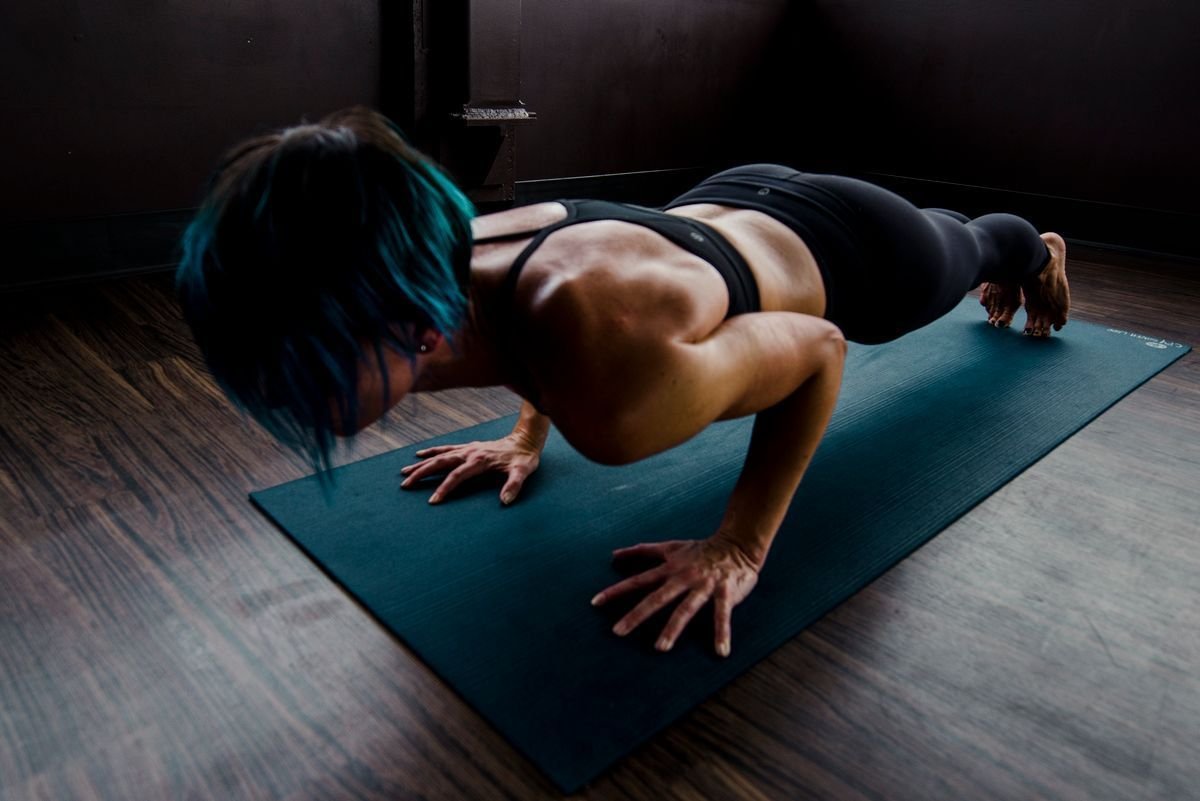
Push-ups (including modified versions on knees): target the chest, shoulders, and arms, scalable from a wall or knee-supported version up to a full standard push-up.
Lunges: target the legs and glutes with an added balance and coordination component compared to squats.
Planks: build core strength and stability, held for time rather than counted in repetitions.
Glute bridges: target the glutes and lower back, a gentler introduction to hip-focused strength work.
Mountain climbers: combine core engagement with a cardio component, useful for building both strength and endurance simultaneously.
| Exercise | Primary Muscles | Beginner Modification |
|---|---|---|
| Squats | Legs, glutes | Chair-assisted squats |
| Push-ups | Chest, shoulders, arms | Knee push-ups or wall push-ups |
| Lunges | Legs, glutes | Stationary lunges, holding onto a wall for balance |
| Planks | Core | Knee planks, shorter hold times |
| Glute bridges | Glutes, lower back | Standard bridges, fewer reps to start |
A Sample Weekly Schedule
A realistic beginner week might look like: Monday — full-body strength (squats, push-ups, planks); Tuesday — rest or light activity like walking; Wednesday — full-body strength with slight variation (lunges, glute bridges, mountain climbers); Thursday — rest or light activity; Friday — full-body strength combining exercises from earlier in the week; Saturday — optional light cardio or active recovery like stretching; Sunday — rest.
This structure provides three dedicated strength sessions with adequate recovery between them, which tends to be more sustainable and effective for genuine beginners than attempting daily intense workouts from the start.
Beginner-Friendly Workout Structure
A simple, repeatable session structure removes the guesswork of designing a new workout each time: five to ten minutes of warm-up (light cardio, dynamic stretching), 20 to 30 minutes of the main workout (a circuit of three to five bodyweight exercises, repeated for two to three rounds), and five to ten minutes of cool-down stretching. This entire structure fits comfortably within 30 to 45 minutes, realistic for most schedules without requiring a significant daily time commitment.
Proper Form Basics
Getting form right matters more than pushing through more repetitions with poor technique, both for effectiveness and injury prevention. A few universal principles: keeping the core engaged during most exercises for stability, moving through a full, controlled range of motion rather than rushing through partial reps, keeping joints (particularly knees) aligned rather than collapsing inward during squats and lunges, and breathing consistently throughout each movement rather than holding the breath.
For anyone unsure about form on a specific exercise, video tutorials from credible fitness sources, or even recording oneself and comparing to reliable reference videos, can help catch form issues that are hard to notice from the inside.
Progressing Over Time
Progress for a beginner doesn’t require added equipment or weight — several simple adjustments work well: increasing repetitions or the number of rounds in a session, reducing rest time between exercises, moving from modified versions (knee push-ups) to full versions (standard push-ups) as strength builds, and adding more challenging variations of familiar exercises (jump squats instead of standard squats, for example) once the basic version feels comfortably manageable.
A general guideline: if the last few repetitions of a set feel genuinely easy rather than challenging, that’s usually a sign it’s time to progress in one of these ways.
Staying Motivated and Consistent
Consistency, more than workout intensity, determines whether a beginner exercise habit actually sticks. A few practical supports: scheduling workouts at a consistent time that fits realistically into an existing routine, tracking workouts in some simple way (even a basic checklist) to build a visible sense of progress, starting with a schedule that feels comfortably achievable rather than overly ambitious, and treating occasional missed sessions as normal rather than a reason to abandon the whole plan.
A Sample Beginner Circuit
To make the structure above concrete, a genuine first-week circuit might look like: 10 squats, 5 to 8 push-ups (modified as needed), a 20 to 30 second plank hold, 10 glute bridges, and 10 stationary lunges per leg — completed as one round, resting briefly, then repeating for two to three total rounds. This entire circuit typically takes 15 to 20 minutes including rest between rounds, easily fitting within the broader session structure once warm-up and cool-down are added.
As a specific benchmark for progress: if this circuit starts feeling comfortably manageable after a few weeks, that’s the signal to increase repetitions, add a fourth round, or move toward more challenging exercise variations.
Setting Up a Home Workout Space
One advantage of bodyweight training is how little space it requires — a cleared area roughly the size of a yoga mat is genuinely sufficient for nearly every exercise in this plan. A few practical considerations still help: a non-slip surface or mat for floor-based exercises like planks, enough overhead clearance for movements like jumping jacks if those get added later, and a consistent, dedicated spot if possible, since a fixed location can reduce the friction of getting started compared to needing to clear space fresh each time.
Common Beginner Mistakes
- Starting with an overly intense schedule that isn’t sustainable, leading to burnout or injury within the first few weeks.
- Prioritizing repetition count over proper form, increasing injury risk and reducing overall effectiveness.
- Skipping warm-up and cool-down, which support both performance and injury prevention.
- Comparing personal progress to more experienced people rather than tracking individual improvement over time.
- Doing the same exact routine indefinitely without any progression, which can plateau results after the initial adaptation period.
Supporting Workouts With Rest and Recovery
Exercise itself is only part of what builds fitness — recovery is where much of the actual adaptation happens. Adequate sleep supports muscle repair and the energy needed for consistent workouts, staying reasonably hydrated supports overall exercise performance, and eating enough throughout the day, including some protein, gives the body what it needs to recover between sessions. Beginners sometimes focus entirely on the workout itself while neglecting these supporting factors, then wonder why progress feels slower or soreness lingers longer than expected.
FAQ
How many days a week should a beginner work out at home? Three to four days a week, with rest days in between, is a sustainable starting frequency for most beginners.
Do I need any equipment to get a good workout at home? No — bodyweight exercises like squats, push-ups, lunges, and planks provide a genuinely effective full-body workout without any equipment.
How long should a beginner home workout be? Around 30 to 45 minutes, including warm-up and cool-down, is realistic and effective for most beginners without requiring an excessive time commitment.
How do I know if I’m doing an exercise with correct form? Comparing your movement against credible video tutorials, or recording yourself and reviewing it, can help identify form issues that are difficult to notice in the moment.
Is it normal to feel sore after starting a new workout routine? Some muscle soreness, particularly in the first couple of weeks, is common and generally normal — sharp or persistent pain, however, is different and worth addressing with a doctor.
How do I progress a bodyweight workout without adding weights? Increasing repetitions, reducing rest time, moving to more challenging exercise variations, and adding more rounds are all effective ways to progress without equipment.
Can I lose weight with just bodyweight exercises at home? Bodyweight workouts can contribute to weight management as part of a broader approach that typically also includes nutrition and overall activity level, though individual results vary.
What should I do if an exercise causes pain? Stop the exercise and assess whether it’s a form issue or something requiring medical attention — persistent or sharp pain is a signal to consult a doctor rather than push through it.
How soon will I see results from a beginner home workout plan? Timelines vary significantly by individual, but many beginners notice improvements in strength and stamina within a few weeks of consistent effort, with more visible physical changes typically taking longer.
Do I need rest days between workouts? Yes — rest days allow muscles to recover and rebuild, which is a genuine part of the strength-building process, not simply time off from progress.
Can beginners do the same workout every day? It’s generally not recommended for strength-focused workouts, since muscles need recovery time between sessions targeting the same muscle groups.
What’s a good warm-up for a home workout? A few minutes of light cardio (marching in place, arm circles) combined with dynamic stretching prepares the body for more intense exercise and reduces injury risk.
Is it better to do a full-body workout or split muscle groups as a beginner? Full-body workouts are generally recommended for beginners, since they allow for adequate recovery between sessions while still training the whole body consistently.
How do I stay motivated without a gym environment or class structure? Setting a consistent schedule, tracking progress, and starting with an achievable routine all help sustain motivation without the external structure a gym or class might provide.
Should I consult a doctor before starting a home workout routine? It’s generally recommended for anyone with existing health conditions, injuries, or significant health concerns, even for a bodyweight-only routine.
How much space do I actually need for a home workout? A cleared area roughly the size of a yoga mat is sufficient for nearly all bodyweight exercises in a typical beginner routine.
Does sleep affect how well a home workout routine works? Yes — adequate sleep supports muscle recovery and the energy needed to stay consistent, making it a meaningful part of overall workout effectiveness.
When should beginners consider adding equipment to their routine? Once bodyweight exercises consistently feel manageable and progression options (more reps, harder variations) start running out, adding light equipment like resistance bands or dumbbells can provide a new challenge.
Conclusion
A genuinely effective beginner workout doesn’t require a gym membership or equipment — a small set of bodyweight exercises, structured consistently over a realistic weekly schedule, builds real strength and a lasting habit. Focus on proper form, progress gradually, and prioritize consistency over intensity in these early weeks. For more on building healthy habits, explore related health and fitness articles on MillionTalks.